How to Use AI to Grow a Small Business Successfully
Are you trying to grow your small business but feel limited by time, budget, or manpower? Do you wonder how some small companies scale quickly while others struggle to keep up with marketing, customer support, and daily operations?
The answer increasingly lies in Artificial Intelligence (AI). In 2026, AI is no longer just for large corporations; it has become one of the most powerful growth tools available to small businesses. From automating repetitive work to improving customer experiences and boosting marketing performance, AI allows you to compete with much larger companies without hiring huge teams.
In this complete guide, you will learn exactly how to use AI to grow your small business, practical strategies you can apply immediately, and the tools that deliver real results.
What AI Means for Small Businesses
Artificial Intelligence refers to systems capable of analyzing data, learning patterns, and performing tasks that normally require human intelligence.
For small businesses, AI acts like:
- A marketing assistant
- A customer service representative
- A data analyst
- A content creator
- A business strategist
Modern AI platforms powered by organizations like OpenAI and cloud ecosystems such as Google Cloud have made advanced automation affordable and accessible.
You no longer need enterprise-level resources to operate efficiently.
Why AI Is Essential for Small Business Growth in 2026
Small businesses face common challenges:
- Limited staff
- Tight budgets
- Competitive markets
- Time-consuming operations
AI solves these problems by increasing productivity without increasing costs.
Key Advantages
Automation of Routine Tasks
AI handles repetitive activities so you focus on growth.
Better Decision Making
Data-driven insights replace guesswork.
Faster Marketing Execution
AI creates campaigns quickly.
Personalized Customer Experience
Small businesses can now offer enterprise-level service.
Areas Where AI Can Transform Your Small Business
Marketing Automation
Marketing is often the biggest growth challenge. AI simplifies it dramatically.
Tools like HubSpot and Mailchimp use AI to:
- Write marketing emails
- Segment audiences
- Optimize campaigns
- Predict customer behavior
You can launch professional marketing strategies without a full marketing department.
Content Creation and Branding
AI helps create:
- Blog posts
- Product descriptions
- Social media captions
- Website copy
- Video scripts
Platforms such as Jasper AI and Canva allow small businesses to produce high-quality content consistently.
Content becomes scalable even with limited resources.
Customer Service Automation
AI chatbots provide instant responses 24/7.
Solutions powered by Zendesk or Intercom can:
- Answer FAQs
- Handle order tracking
- Collect customer feedback
- Reduce support workload
Customers receive faster service while you save operational costs.
Sales Optimization
AI analyzes customer data to identify buying patterns.
Benefits include:
- Lead scoring
- Sales forecasting
- Automated follow-ups
- Upselling recommendations
Even small sales teams can operate like advanced enterprise systems.
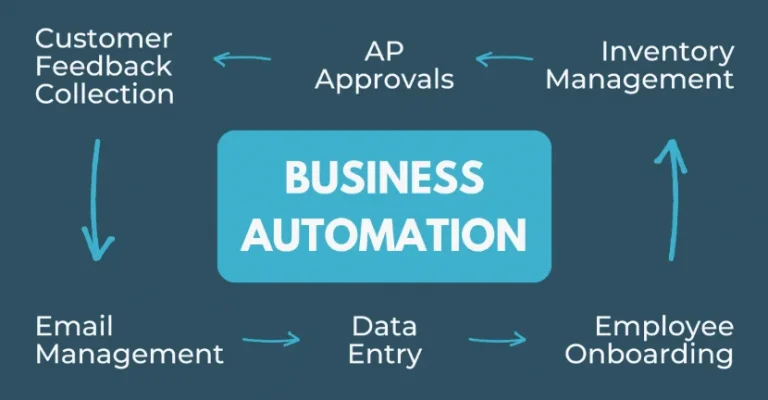
Business Operations and Workflow Automation
AI tools automate internal operations such as:
- Scheduling
- Inventory management
- Accounting categorization
- Task management
Platforms like Zapier connect multiple apps to automate workflows without coding.
Step-by-Step Guide to Using AI for Business Growth
Step 1: Identify Time-Consuming Tasks
Start by listing activities that consume most of your time:
- Emails
- Social media posting
- Customer inquiries
- Data entry
These are ideal candidates for AI automation.
Step 2: Start with One AI Tool
Avoid adopting many tools at once.
Begin with:
- Marketing automation
- Content generation
- Customer support chatbot
Small wins build momentum.
Step 3: Automate Marketing First
Marketing typically delivers the fastest ROI.
Use AI to:
- Generate campaigns
- Schedule posts
- Analyze performance
Step 4: Use AI Analytics for Decision Making
AI dashboards reveal:
- Customer trends
- Popular products
- Sales performance
- Growth opportunities
Decisions become evidence-based rather than emotional.
Step 5: Scale Operations Gradually
Once automation works, expand AI into:
- Hiring processes
- Financial tracking
- Customer personalization
AI becomes your digital workforce.
AI Applications Across Different Small Business Types
Retail Businesses
AI predicts inventory demand and recommends pricing strategies.
E-commerce Stores
Platforms like Shopify integrate AI for product recommendations and abandoned cart recovery.
Service-Based Businesses
AI automates appointment scheduling and client communication.
Local Businesses
AI improves local SEO visibility and customer engagement.
Freelancers and Agencies
AI accelerates content production and project management.
AI Small Business Growth Table
| Business Function | Traditional Method | AI Solution | Growth Impact |
|---|---|---|---|
| Marketing | Manual campaigns | AI automation | Faster reach |
| Customer Support | Human-only | AI chatbots | 24/7 service |
| Sales | Manual tracking | Predictive analytics | Higher conversion |
| Operations | Spreadsheets | Workflow automation | Efficiency |
| Content Creation | Outsourcing | AI generation | Cost savings |
AI for Customer Personalization
Modern customers expect personalized experiences.
AI analyzes:
- Browsing behavior
- Purchase history
- Preferences
- Engagement patterns
You can deliver:
- Personalized offers
- Smart product recommendations
- Customized emails
This increases loyalty and lifetime customer value.
AI-Powered Financial Management
AI helps manage finances intelligently.
Features include:
- Expense categorization
- Cash flow forecasting
- Fraud detection
- Automated invoicing
Accounting platforms like QuickBooks integrate AI insights for small business owners.
Using AI for Social Media Growth
Social media requires constant consistency; something difficult for small teams.
AI helps you:
- Generate captions
- Design visuals
- Schedule posts
- Analyze engagement trends
Platforms such as Hootsuite automate publishing and performance tracking.
AI for Hiring and Team Productivity
Recruitment can be expensive and slow.
AI tools assist with:
- Resume screening
- Candidate matching
- Skill evaluation
- Interview scheduling
Once hired, AI productivity assistants help teams manage tasks efficiently.
Common Mistakes Small Businesses Make with AI
Trying Too Many Tools
Start simple and scale gradually.
Ignoring Human Touch
AI enhances relationships but should not remove personal communication.
Lack of Clear Goals
Define measurable outcomes before implementing AI.
Not Training Staff
Employees should understand how to work alongside AI systems.
Affordable AI Strategy for Small Businesses
You do not need a large budget to benefit from AI.
Beginner AI Stack Example
- AI writing tool for marketing
- Automation tool for workflows
- Chatbot for customer service
- Analytics dashboard
Many platforms offer free tiers or low-cost subscriptions.
The Future of AI for Small Business Growth
By 2026 and beyond, AI will enable:
- Autonomous marketing campaigns
- Predictive business planning
- Hyper-personalized customer journeys
- Voice-controlled business management
- AI-powered entrepreneurship
Small businesses that adopt AI early gain a strong competitive advantage.
How AI Gives Small Businesses a Competitive Edge
Large companies traditionally dominated markets due to resources.
AI levels the playing field by giving small businesses:
- Enterprise-level technology
- Faster execution
- Data intelligence
- Operational efficiency
You compete through smart systems, not company size.
Frequently Asked Questions (FAQs)
Is AI expensive for small businesses?
No. Many tools offer affordable subscriptions or free versions suitable for startups.
Do I need technical skills to use AI?
Most modern AI platforms are beginner-friendly and require no coding knowledge.
What is the best AI area to start with?
Marketing automation and customer support usually provide the fastest results.
Can AI replace employees?
AI supports employees by automating repetitive work, allowing teams to focus on strategic tasks.
How quickly can AI improve business growth?
Many businesses see improvements in productivity and marketing performance within weeks.
Is AI useful for local small businesses?
Yes. AI improves local marketing, customer engagement, and operational efficiency.
Final Thoughts
Using AI to grow a small business is no longer optional — it is becoming essential for staying competitive in modern markets. Artificial intelligence allows you to automate operations, enhance customer experiences, make smarter decisions, and scale growth without dramatically increasing costs.
The most successful small business owners in 2026 are not necessarily those working harder, but those working smarter with AI.
Start small, focus on solving one business problem at a time, and gradually expand your AI strategy. When you combine your entrepreneurial vision with intelligent automation, you unlock growth opportunities that were once available only to large corporations.
AI is not replacing small businesses; it is empowering them to grow faster than ever before.