Generative AI Explained: How It Works & Real Uses
Have you ever wondered how AI can write articles, create images, or even generate code in seconds? Or are you curious whether tools like ChatGPT can actually think like humans or just predict words? If these questions are on your mind, you’re in the right place. Let’s break down generative AI in a simple, practical, and no-confusion way just like I would explain it to a friend.
What is Generative AI?
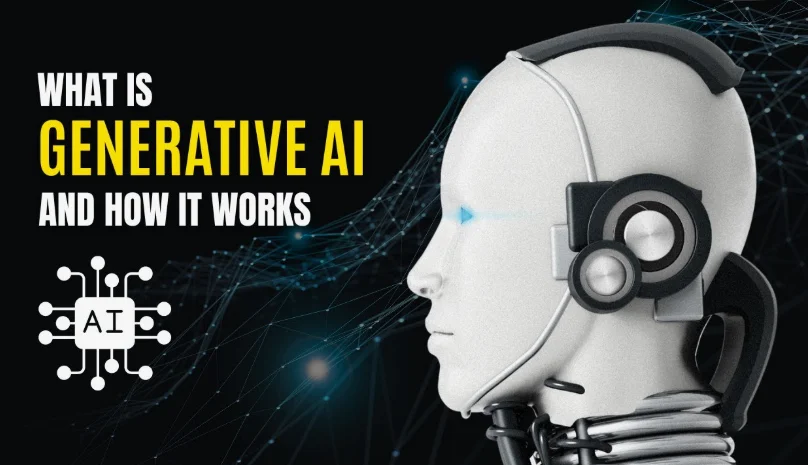
Generative AI is a type of artificial intelligence that can create new content instead of just analyzing existing data.
That content can be:
- Text (articles, emails, scripts)
- Images (AI art, designs)
- Code (websites, apps)
- Music and audio
- Videos
Popular tools like OpenAI‘s ChatGPT, DALL·E, and Google Gemini are all examples of generative AI systems.
In simple words:
Generative AI doesn’t just understand data; it creates new data.
How is Generative AI Different from Traditional AI?
Before generative AI, most AI systems were predictive or analytical.
| Feature | Traditional AI | Generative AI |
|---|---|---|
| Purpose | Analyze & predict | Create new content |
| Output | Numbers, classifications | Text, images, audio |
| Example | Spam detection | AI writing tools |
| Interaction | Limited | Conversational |
Think of it like this:
- Traditional AI = Calculator
- Generative AI = Creative assistant
How Does Generative AI Work?
Now let’s understand the core without making it complicated.
1. Training on Massive Data
Generative AI models are trained on huge datasets from:
- Books
- Websites
- Code repositories
- Images
For example, models like GPT-4 learn patterns in language by analyzing billions of sentences.
👉 It doesn’t “memorize” everything.
👉 It learns patterns, structure, and relationships.
2. Neural Networks (The Brain Behind AI)
Generative AI uses something called neural networks, especially a type called:
➡️ Transformer model
These are designed to:
- Understand context
- Predict sequences
- Generate human-like responses
3. Prediction Mechanism
Here’s the magic:
When you type a prompt like:
👉 “Write a blog about fitness”
The AI:
- Breaks your input into tokens
- Predicts the most likely next word
- Continues predicting word by word
👉 It’s basically super advanced autocomplete.
4. Fine-Tuning & Reinforcement Learning
Models are improved using:
- Human feedback
- Reinforcement learning
- Quality training datasets
For example, OpenAI uses techniques like RLHF (Reinforcement Learning with Human Feedback) to make responses more helpful and safe.
Types of Generative AI Models
There are different types of models depending on what they generate.
1. Text Generation Models
- Chatbots
- Content writers
- Code assistants
Examples:
- ChatGPT
- Claude
2. Image Generation Models
- AI art
- Thumbnails
- Design assets
Examples:
- Midjourney
- DALL·E
3. Audio & Music Generation
- Voice cloning
- AI music
Example:
- ElevenLabs
4. Video Generation
- AI videos
- Animations
Example:
- Runway ML
Real-World Uses of Generative AI
Let’s make it practical. Here’s where generative AI is already being used:
1. Content Creation
- Blog writing
- SEO articles
- Social media posts
👉 This is probably what you’re interested in if you run websites like yours.
2. Graphic Design
- Logos
- Thumbnails
- Website banners
3. Coding & Development
- Auto code generation
- Debugging
- App building
4. Marketing & Ads
- Copywriting
- Email campaigns
- Product descriptions
5. Education
- Study guides
- Summaries
- AI tutors
6. Business Automation
- Customer support bots
- Workflow automation
Benefits of Generative AI
Here’s why everyone is talking about it:
1. Saves Time
What takes hours can be done in seconds.
2. Boosts Productivity
You can do more work with fewer resources.
3. Creativity Enhancement
Gives ideas, drafts, and inspiration.
4. Cost Efficiency
Reduces need for large teams.
Limitations and Risks
Let’s be real generative AI isn’t perfect.
1. Incorrect Information
Sometimes it generates wrong or outdated info.
2. Lack of True Understanding
It doesn’t “think” it predicts.
3. Bias in Data
If training data is biased, outputs may be too.
4. Ethical Concerns
- Deepfakes
- Plagiarism
- Misuse
How Generative AI is Changing the Future
Generative AI is not just a trend; it’s a technology shift.
Key future trends:
- AI-powered businesses
- Personalized AI assistants
- Fully automated content systems
- AI in healthcare & law
Companies like Microsoft and Google are heavily investing in AI, which shows how big this is going to be.
Generative AI vs Human Creativity
This is a common concern.
Can AI replace humans?
Short answer: No; but it can assist.
| Aspect | Human | Generative AI |
|---|---|---|
| Creativity | Original thinking | Pattern-based |
| Emotions | Real | Simulated |
| Speed | Slow | Fast |
| Accuracy | Context-aware | Data-driven |
Best approach: Use AI as a tool, not a replacement.
How You Can Use Generative AI (Practical Tips)
If you own websites (like you do), here’s how you can use it:
For SEO Content
- Blog posts
- Meta descriptions
- Keyword ideas
For Tools Websites
- UI text
- Feature descriptions
- Landing pages
For Monetization
- Affiliate content
- Ad copy
- Email funnels
Basically, it can scale your content business fast.
FAQs (Most Searched Questions)
1. Is generative AI free to use?
Some tools are free, but advanced features often require paid plans.
2. Is generative AI safe?
Yes, but depends on how it’s used. Always verify important information.
3. Can generative AI replace jobs?
It may replace repetitive tasks, but it also creates new opportunities.
4. What is the difference between AI and generative AI?
AI is a broad field. Generative AI is a subset focused on content creation.
5. Does generative AI copy content?
No, it generates new content based on patterns but similarity can happen.
6. How accurate is generative AI?
It can be highly accurate, but not always. Fact-checking is important.
7. What skills are needed to use generative AI?
Basic skills:
- Writing prompts
- Understanding tools
- Editing outputs
Final Thoughts
Generative AI is one of the most powerful technologies of our time.
It can:
- Save you time
- Scale your work
- Boost your income
But at the same time; It requires smart usage and human oversight
If you use it correctly, it can become your biggest digital advantage especially for content, tools, and online businesses.