Business Automation Guide for Beginners: How It Works
Are you tired of doing the same repetitive tasks every day in your business? Do you want to grow faster without hiring more people or working longer hours? If yes, then understanding business automation can completely change how you work. And don’t worry you don’t need to be a developer or tech expert to get started (perfect for you 😉). Let’s break everything down in a simple, practical, and beginner-friendly way, so you can actually use it not just understand it.
What is Business Automation?
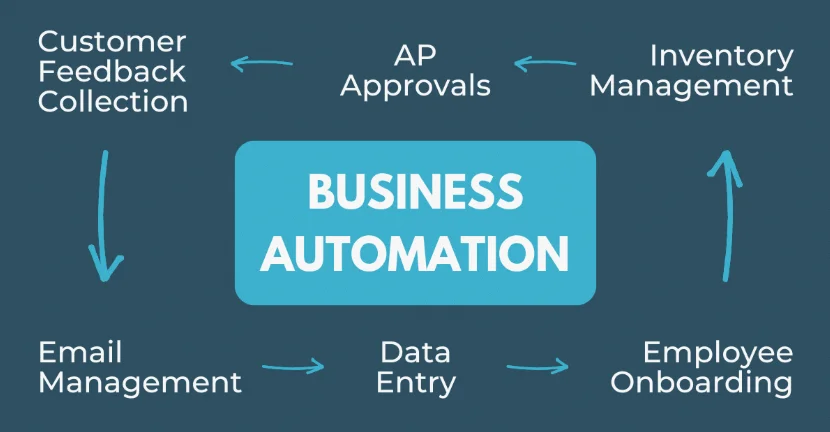
Business automation is the use of software and technology to perform tasks automatically, without manual effort.
Instead of doing things like:
- Sending emails one by one
- Updating customer data manually
- Posting content daily
You create systems that handle these tasks for you. Tools like Zapier, Make (Integromat), and HubSpot are widely used for this purpose.
How Business Automation Works (Core Concept)
At its core, automation works on a simple principle:
Trigger → Process → Action
Let’s simplify it:
Example:
- Trigger: A user signs up on your website
- Process: System captures user data
- Action:
- Sends a welcome email
- Adds user to CRM
- Notifies you
All of this happens automatically.
Think of automation as a digital employee that works 24/7 without breaks.
Key Components of Business Automation
To truly understand automation, you need to know its building blocks:
1. Triggers (Starting Point)
A trigger is an event that starts the automation.
Examples:
- New user registration
- Form submission
- Purchase completed
2. Actions (What Happens Next)
Actions are tasks performed automatically.
Examples:
- Send email
- Add data to spreadsheet
- Create task
3. Workflows (Automation Chains)
A workflow is a sequence of automated steps.
Example:
- Signup → Email → CRM → Follow-up → Offer
4. Integrations (Connecting Tools)
Automation works best when tools are connected.
Example:
- Website + Email tool + CRM
Platforms like Zapier allow you to connect hundreds of apps without coding.
Types of Business Automation
Automation can be applied to different areas of your business:
1. Marketing Automation
This is one of the most popular uses.
You can automate:
- Email campaigns
- Social media posts
- Lead nurturing
Tools:
- Mailchimp
- ActiveCampaign
2. Sales Automation
Helps manage leads and sales pipelines.
You can automate:
- Lead tracking
- Follow-ups
- Deal updates
Tools:
- Salesforce
- HubSpot
3. Customer Support Automation
Improves response time and support efficiency.
You can automate:
- Chat responses
- Ticket management
- FAQs
Tools:
- Zendesk
4. Operations Automation
Handles internal processes.
You can automate:
- Task assignments
- Notifications
- Workflow approvals
Tools:
- Trello
- Asana
Step-by-Step Guide to Start Business Automation
Let’s make this practical for YOU 👇
Step 1: Identify Repetitive Tasks
Ask yourself:
- What do I do daily?
- What tasks waste time?
👉 For your websites, it could be:
- Publishing content
- Responding to emails
- Managing users
Step 2: Choose Beginner-Friendly Tools
Start simple:
- Automation: Zapier
- Email: Mailchimp
- CRM: HubSpot
Step 3: Create Your First Workflow
Example:
- User signs up
- Welcome email sent
- User added to list
- Follow-up email scheduled
Step 4: Test Your Automation
Always test:
- Check triggers
- Verify emails
- Fix errors
Step 5: Optimize and Expand
Once it works:
- Add more steps
- Improve efficiency
- Automate more processes
Real-Life Example (For Your Type of Work)
Since you run WordPress websites, here’s a practical scenario:
Without Automation:
- Manual email replies
- Manual content posting
- Manual lead tracking
With Automation:
- Signup → Auto email
- Blog publish → Auto social share
- Lead capture → Auto CRM entry
Result:
- Less work
- Faster growth
- Better organization
Benefits of Business Automation
1. Saves Time
Automates repetitive work.
2. Increases Productivity
Focus on strategy instead of tasks.
3. Reduces Errors
Automation ensures consistency.
4. Improves Customer Experience
Faster responses and smooth processes.
5. Scales Your Business
Grow without increasing workload.
Challenges of Business Automation
1. Setup Time
Initial setup takes effort.
2. Learning Curve
Some tools require learning.
3. Cost
Advanced tools may be paid.
But once set up, the long-term benefits outweigh these challenges.
Business Automation Workflow Table
| Step | Trigger | Action | Tool Example |
|---|---|---|---|
| 1 | User signup | Add to email list | Mailchimp |
| 2 | New lead | Send welcome email | HubSpot |
| 3 | Blog published | Share on social media | Zapier |
| 4 | Customer query | Auto-reply chatbot | Zendesk |
Business Automation vs Manual Work
| Feature | Manual Work | Automation |
|---|---|---|
| Time | High | Low |
| Accuracy | Medium | High |
| Effort | Continuous | One-time setup |
| Scalability | Limited | High |
Future of Business Automation
Automation is rapidly evolving with AI integration.
Companies like Microsoft, Google, and Amazon are leading this transformation.
Future trends include:
- AI-powered workflows
- No-code automation tools
- Smart assistants
- Fully automated businesses
Practical Automation Ideas for You
Since you manage multiple websites, you can automate:
🔹 Content Publishing
- Schedule blog posts
- Auto-share on social media
🔹 Lead Generation
- Auto email sequences
- Subscriber tracking
🔹 SEO Tasks
- Meta generation
- Internal linking
🔹 Monetization
- Affiliate emails
- Ad tracking
Start small and scale gradually.
FAQs (Most Searched Questions)
1. What is business automation in simple terms?
It means using software to do tasks automatically instead of doing them manually.
2. Is business automation expensive?
It can start free, but advanced features may require paid tools.
3. Can beginners use business automation?
Yes, no coding is required with modern tools.
4. What are the best automation tools for beginners?
Zapier, Mailchimp, and HubSpot are great starting points.
5. How long does it take to set up automation?
Basic workflows can be set up within a few hours.
6. Does automation replace employees?
It replaces repetitive tasks, not strategic roles.
7. What is the biggest benefit of automation?
Saving time and increasing efficiency.
Final Thoughts
Business automation is one of the smartest moves you can make today.
It helps you:
- Work less
- Earn more
- Scale faster
And the best part? You don’t need technical skills to start. If you begin with just one simple automation, you’ll quickly realize how powerful it is.