How Generative AI Improves Customer Personalization
Are you struggling to deliver personalized experiences at scale? Do you want to engage customers with content, offers, and messages that feel truly tailored to them? If yes, then generative AI is revolutionizing the way businesses personalize their customer interactions. Traditional personalization relies on basic segmentation and static templates, which often feel generic.
Generative AI, however, leverages machine learning, natural language processing, and predictive analytics to create highly individualized content, recommendations, and experiences automatically.
In this article, we’ll explore how generative AI improves customer personalization, key strategies, tools, workflows, metrics, a comparison table, and FAQs so you can implement AI-driven personalization effectively via the voozon platform.
What Is Generative AI in Customer Personalization?
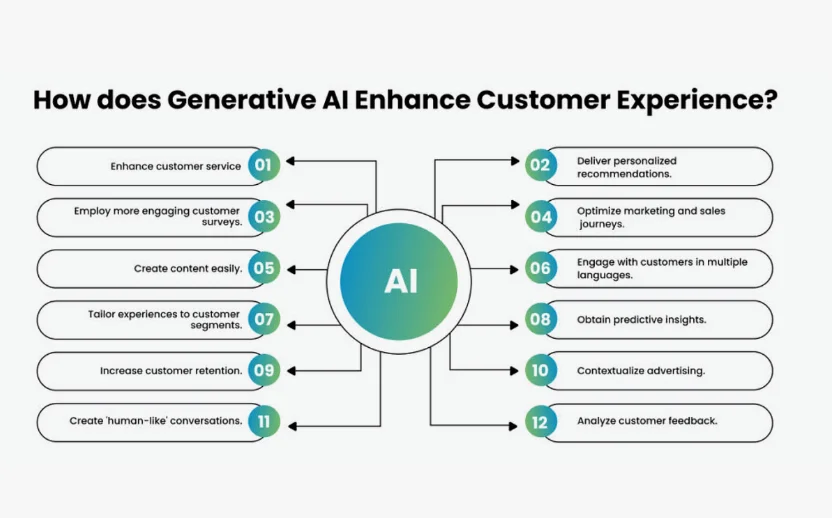
Generative AI refers to artificial intelligence systems that create content, insights, or recommendations based on patterns in data. In customer personalization, generative AI can:
- Generate product recommendations tailored to individual behavior
- Produce dynamic content for emails, websites, and ads
- Craft personalized messaging for customer service and marketing
- Predict future customer needs and preferences
Unlike traditional rule-based personalization, generative AI learns continuously from customer behavior, making personalization scalable, dynamic, and highly relevant.
Why Generative AI Is a Game-Changer for Personalization
1. Hyper-Personalized Content
AI models like OpenAI’s GPT or Google’s Gemini can generate content for emails, websites, and messaging tailored to individual customers’ interests.
2. Dynamic Product Recommendations
AI analyzes browsing, purchase, and engagement data to suggest the most relevant products or services in real-time.
3. Predictive Customer Insights
Generative AI forecasts trends, predicts customer churn, and identifies upsell or cross-sell opportunities.
4. Scalable Personalization
AI can personalize millions of customer interactions simultaneously without manual effort.
5. Enhanced Engagement
Personalized experiences created by AI improve open rates, click-through rates, conversions, and long-term loyalty.
Key Components of AI-Driven Personalization
- Data Collection – Aggregate customer data from CRMs (HubSpot, Salesforce), e-commerce platforms (Shopify, WooCommerce), email campaigns (Mailchimp, Brevo), and social media.
- Behavior Analysis – Track interactions, purchase history, and engagement patterns.
- Generative AI Model – Use AI to generate personalized content, recommendations, or communication.
- Real-Time Delivery – Display personalized content on websites, apps, emails, and ads.
- Feedback & Optimization – Continuously improve personalization based on engagement and outcomes.
Generative AI Tools for Customer Personalization
| Tool | Primary Use | Generative AI Capabilities | Best For |
|---|---|---|---|
| OpenAI GPT | Content generation | Personalized email, chat, social media, product descriptions | All industries |
| Persado | Marketing language optimization | AI-generated persuasive messaging | Marketing & e-commerce |
| Dynamic Yield | Experience personalization | AI-powered product recommendations, A/B testing | Retail & e-commerce |
| Salesforce Einstein | Predictive personalization | Personalized customer journeys, recommendations | Enterprise B2B |
| Adobe Sensei | Digital experience | Dynamic content personalization across channels | Creative & marketing teams |
| Algolia Recommend | Product discovery | AI-driven search and recommendation | E-commerce platforms |
How Generative AI Enhances Different Channels
1. Email Marketing
- AI generates subject lines, body content, and CTAs personalized to each subscriber
- Predicts optimal send times and content preferences
2. Website & App Personalization
- Tailors landing pages dynamically based on user behavior
- Recommends products, content, or services most likely to convert
3. E-commerce Recommendations
- Suggests products or bundles based on browsing history
- Predicts complementary purchases and personalizes offers
4. Customer Support & Chatbots
- AI generates personalized responses based on user queries
- Provides recommendations or solutions proactively
5. Social Media & Advertising
- Generates ad copy and creative assets tailored to specific audiences
- Improves targeting with predicted engagement patterns
Implementing Generative AI for Personalization: Step-by-Step
Step 1: Collect Quality Customer Data
- CRM data (Salesforce, HubSpot, Zoho)
- Website and app analytics
- Email engagement metrics
- Social media interactions
Step 2: Segment and Analyze Behavior
- Group customers by interests, purchase patterns, and engagement levels
- Use AI to detect patterns and predict preferences
Step 3: Integrate Generative AI Models
- Select AI tools capable of generating content dynamically
- Train models using historical data and context
Step 4: Deliver Personalized Experiences
- Dynamic emails, product recommendations, chat responses, website content
- Real-time personalization enhances relevance
Step 5: Monitor and Optimize
- Track metrics like engagement, conversions, repeat purchases
- Feed insights back into AI models to refine recommendations
Key Metrics to Measure AI Personalization Success
| Metric | Purpose | AI Enhancement |
|---|---|---|
| Open Rate | Measures email engagement | AI-generated personalized subject lines |
| Click-Through Rate | Measures engagement | Personalized CTAs & content |
| Conversion Rate | Tracks goal completion | AI predicts optimal offers |
| Customer Retention | Tracks loyalty | Personalized retention campaigns |
| Average Order Value | Measures upsell/cross-sell | AI recommends relevant products |
| Engagement Time | Website or app usage | AI-tailored content keeps users engaged |
FAQs About Generative AI and Customer Personalization
Q1. Can generative AI fully replace human personalization?
Not completely. AI excels at scaling personalization, but human oversight ensures messaging aligns with brand tone and strategy.
Q2. Is generative AI expensive for small businesses?
Costs vary by tool, but scalable solutions like GPT API, Mailchimp AI, or Dynamic Yield offer options for SMBs.
Q3. How accurate are AI-generated recommendations?
Highly accurate when trained on quality historical data; continuous learning improves relevance over time.
Q4. Can AI personalize in real-time across channels?
Yes, generative AI can deliver dynamic recommendations and content simultaneously on email, websites, apps, and ads.
Q5. What industries benefit most from AI personalization?
Retail, e-commerce, SaaS, digital marketing, finance, and customer service industries see the most ROI.
Final Thoughts
Generative AI is transforming customer personalization by allowing businesses to create highly relevant, dynamic, and scalable experiences. By leveraging AI for content, recommendations, messaging, and predictive insights, companies can:
- Increase engagement
- Boost conversions
- Improve customer loyalty
- Optimize marketing ROI
The key is to combine quality data, AI tools, and continuous monitoring. Generative AI is not just a technology; it’s a strategic advantage that empowers businesses to deliver truly personalized experiences at scale.